News, Featured
News, Featured
News, Featured
“It Brings the World to Us”: Lauren Wild on Sitka WhaleFest’s 30th Anniversary
For decades, Sitka WhaleFest has celebrated marine life in and around Sitka Sound through science, art, and culture. WhaleFest brings together scientists, educators, artists, and local citizens to share knowledge, strengthen community, and inspire stewardship.
This year marks an extraordinary milestone: the 30th annual Sitka WhaleFest, which will be held from November 5th—9th, 2026. This year’s theme is “Generations of Giants: 30 Years of Whales, Wisdom, and What Follows.”
To commemorate this anniversary, we’re highlighting some of the many dedicated individuals who have helped shape and grow WhaleFest over the years into the landmark event it is today. Read on to learn about what makes WhaleFest special — and be sure to buy your ticket for the 30th anniversary symposium today.
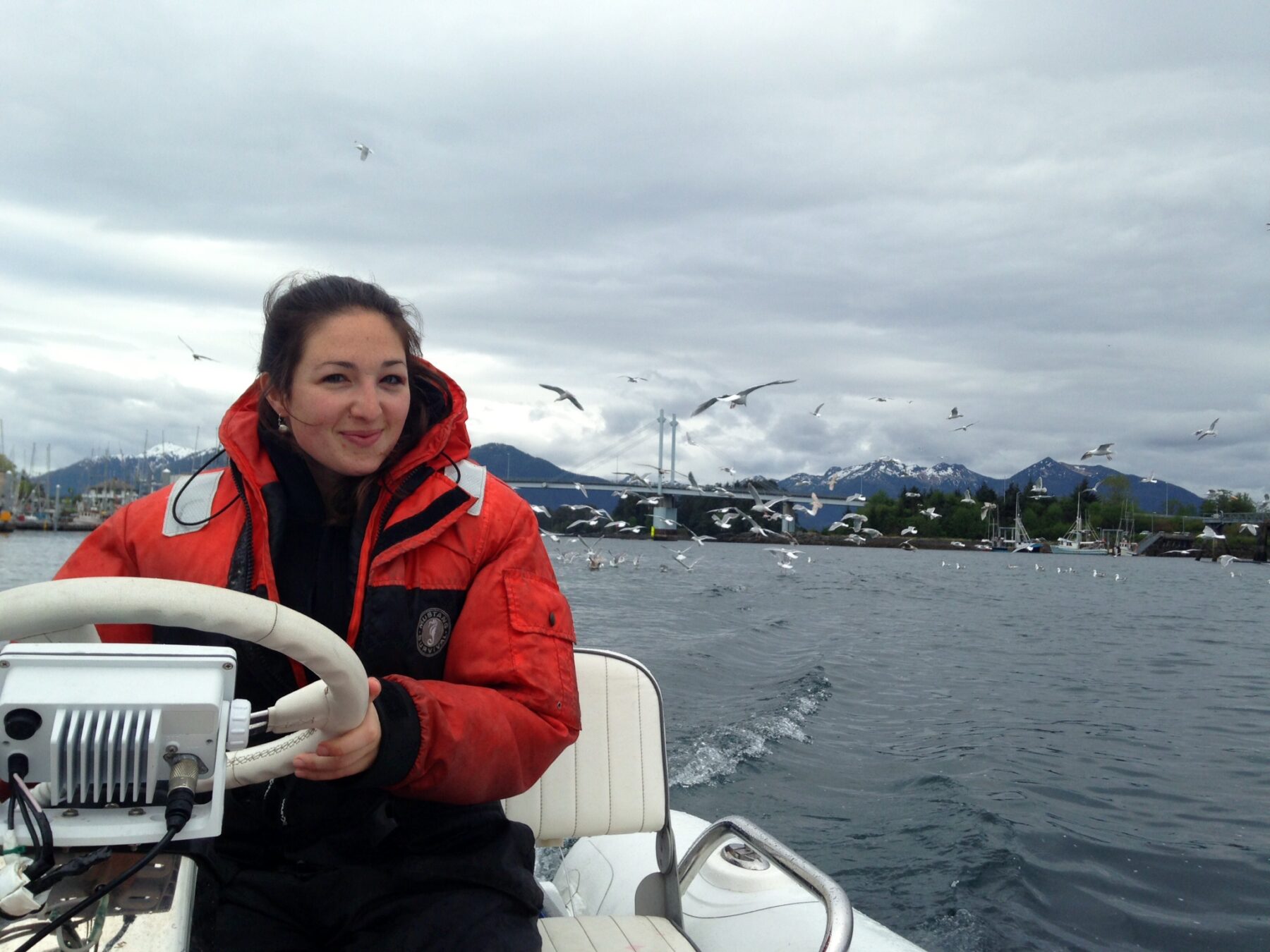
Lauren Wild, an assistant professor at the University of Alaska Southeast, has had a firsthand look at how Sitka WhaleFest has grown for nearly twenty years: after working alongside WhaleFest founder Jan Straley as both an intern and technician starting in 2007, Wild watched WhaleFest expand into an official symposium. She joined the Science Symposium Committee in 2022, and helps identify themes, speakers, and key events every year.
For Wild, a native Sitkan, WhaleFest isn’t just exciting because of the science it delves into: as she can attest, it gives community members an important platform to interact and engage with experts from all over. “Sitka is a curious community,” she says. “We are a community that really is interested in what’s happening. We’re interested in the natural world. So an event like Whale Fest is really exciting.”
Read on to learn more about how WhaleFest “brings the world to us.”
How have you seen WhaleFest change from what it originally started as to the much bigger event it is today?I think the core of WhaleFest has remained the same, with it centered around a symposium bringing people that are subject matter experts in various marine science fields to Sitka to share what they do and what their passions are. WhaleFest has always gravitated towards people that have connections to the community or research that’s happening in the community talking about what they do in a way that’s digestible and exciting and accessible. So that core has remained the same.
WhaleFest has changed in the sense that it started out as its own thing. It became a nonprofit pretty quickly. Then it got brought under the umbrella of the Science Center, because the mission and vision of science and science education really matched the science center’s mission.
The other side that has grown is the education component. It used to just be that the local high schools and middle schools would participate and get extra credit for going … now we have students from all over Southeast Alaska coming.
We now have educational breakouts for the speakers, for the undergraduate students and the dual enrollment students after the talks each day. … That side of things with students and young people has really, really grown, which has been really fun to see — the enthusiasm that these students have and how excited they get about learning all of the different topics that are going to be covered during WhaleFest. Being able to speak with the speakers and get face-to-face time and learn their story of how they became marine scientists, it makes it more accessible to rural students and students in Alaska that feel out of the mix of what’s happening in the rest of the country or the world. It makes it seem like something they could do.
You grew up in Sitka, and have lived here for a long time. What benefit does WhaleFest bring to the community?
I think it brings the world to us, which is really great. It brings outside scientists and knowledge holders and experts in their field to our community, and lets them share what they’re doing.
Sitka is a curious community. We are a community that is really interested in what’s happening. We’re interested in the natural world. So an event like WhaleFest is really exciting for people that have no science background or work in various industries around town, but have always been interested in what’s going on on the water and what marine life is doing and noticing changes.
And we’re a chatty community too. So being able to have this really big event where people come from out of town and just all want to talk about what’s going on related to whatever theme we’re covering that year is really exciting and a great way for Sitka to celebrate marine science every year.
And the fact that it happens in the shoulder season outside of our busy summer tourist season makes it more accessible as well, because people aren’t as busy at the beginning of November as they are in June and July. And we have lots of whales coming through that time of year, so there’s lots of wildlife to be seen. It’s kind of a great thing that we can have just for us, that’s not a big tourist thing that gets overrun by visitors.
Now, that being said, one of the great things about WhaleFest is that it does attract people from out of town to come to Sitka for WhaleFest. So it’s not that we don’t want anybody else but our local community to be there. It’s just that it’s not happening during that big crazy tourist season where we have tons and tons of visitors. These visitors are here specifically for the same reason our local community members are here, to get excited about these different marine science topics and learn from these subject matter experts and knowledge bearers that are coming in to share what they do.
Something unique about WhaleFest that you don’t often see in scientific symposiums is a heavy focus on the social sciences as well as ‘traditional’ or ‘hard’ sciences. Why is that valuable?
WhaleFest is definitely not your typical science conference. There is hard science for hard science people that want to learn the methodology and want to understand the data. But we also have art exhibits and other ways of people being able to connect with marine science. Science does not exist in a bubble, and what I think we try to get at with this event is that you can be an artist and still have a role at WhaleFest, because there’s art in all of this. It makes it more accessible to anybody and inclusive to anybody.
The other part about WhaleFest that’s really unique is that it’s very much a public engagement and community festival. The audience is not your typical scientific conference audience. The audience is members of the public. Commercial fishermen, artists, teachers, lifelong learners, anthropologists, whale watching boat captains.
The audience is much different. So [speakers] have to think about, ‘How does my work relate to the community and people, rather than doing science for the sake of answering a scientific question?’
It helps speakers think about, ‘Why is my science useful? What does it mean to people? How can other people that are not scientists relate to my work? And how can I share the importance of what I’m doing to a non-science audience?’
Like you just noted, WhaleFest isn’t just scientists talking at an audience — it’s really a back-and-forth where people who are going to be most affected by these topics are able to have a dialogue. Why is that important?We really talk to our speakers a lot before the event about what to expect, and that includes how to share what they do in a way that is accessible and understandable and digestible by members of the community.
We like to have them be accessible. So we have them go out on the wildlife cruises and people from the public can mingle with the scientists and talk to them one-on-one about their work and ask them specific questions. A lot of them will compete in the fun run, and they’ll go to the marketplace and buy Christmas gifts for their family and friends back home. It’s another way for people to come up to that speaker one-on-one and talk to them about what their work is.
So they’re not just talking at the public, and they’re not just talking about their data. They’re really sharing their story.
Each speaker spends an hour after the talks finish that day with all the student groups, the undergraduate and dual enrollment student groups. That’s an opportunity for these smaller groups of students to engage and ask questions about how these people ended up doing what they’re doing. Had they always wanted to be a seal biologist or did that sort of fall into their lap?
How do skills transfer? If they want to be a speaker someday, what are some classes they should take? Or what are some skills they should learn to be more marketable in today’s world of competitive graduate programs and the job market, especially in marine science?
The speakers are definitely not just behind a glass wall at WhaleFest.