News, Featured
News, Featured
News, Featured
Meet a Scientist: Haleigh Yang
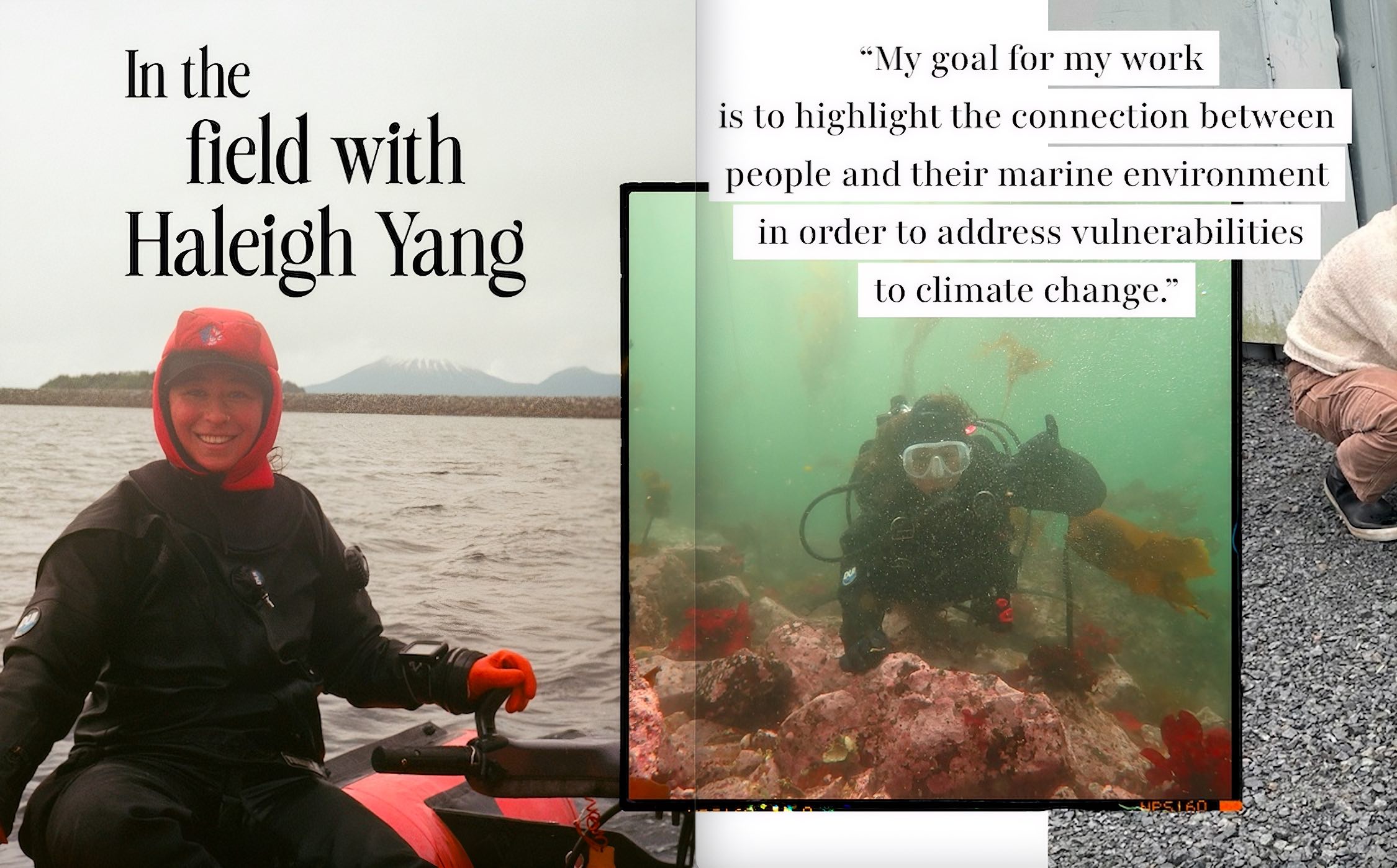
Our work focuses on the lands and waters of Sitka Sound—but it brings together researchers, educators, and scientists from across the country. Their unique perspectives and expertise all combine with that of our staff and local partners to help deepen our understanding of Southeast Alaska’s complex environments.Throughout the year, we are lucky to welcome a variety of external researchers and collaborators to Sitka. Each individual contributes a unique lens—whether they’re working on marine ecosystems, climate change, fisheries, coastal resilience, or much more—while contributing to research that resonates far beyond our region.Haleigh Yang is a PhD student at UC Santa Cruz working with Dr. Kristy Kroeker. She is interested in understanding how coastal marine ecosystems, such as kelp forests, might respond to changing environmental conditions, and how that affects the species people care about, like Pinto Abalone. Before graduate school, Haleigh worked as an educator in San Francisco teaching garden education to K-5 students and a wildlife guide in the San Juan Islands. After completing her PhD, she hopes to continue working to understand the human dimensions of climate change across coastal communities, like Sitka.
Describe your research objectives?My research aims to understand how coastal marine environments, such as Kelp Forests, may change under future environmental conditions, and what that means for the organisms people care about. A lot of this work takes place in kelp forests, where I am currently looking at the seasonal changes across different types of forests and the unique animal communities they support. In addition, I am also really interested in understanding the vulnerability of Pinto Abalone to changes in their environment, as they are super important for the ecosystem and for the people of Sitka!
What does your field work look like when you come to Sitka as a visiting researcher?
When I am in Sitka, I am predominantly SCUBA diving in kelp forests! Most of my dives involve identifying, counting, and measuring the algae and animals I see underwater. And depending on what season I am working in, the field conditions can be sunny and warm, windy and raining, or straight up snowing!
How does working in Sitka broaden your research?Sitka’s marine ecosystem is vast, and members of the community are incredibly knowledgeable about changes in the ecosystem. My field research feels really exploratory, especially when our team is diving in more remote and secluded locations. Working with the SSSC has given me a special platform to share the work we do with the community, whether that be through events like our Understory: Art, Algae, and Kelp Forest Researchevent last summer, or during the State of the Sound Symposium in February.
How do you engage with the local community here in Sitka while conducting field work in their home?I love sharing the work we are doing when we are in town and the SSSC has helped facilitate this in the past by connecting us with community news outlets like KCAW and Daily Sitka Sentinel, through fun events for the community, and sharing our work at the Natural Resources Committee meeting. Sometimes, sharing our work can be as informal as chatting with folks we see around town at Backdoor, in Seamart, or walking on Indian River Trail. During each trip, I also love attending other events that are happening in town because they are always fun and can be a great way for me to meet more people in town and get to know them better. I feel like Sitka is my home away from home.
Why should communities (whether in CA, AK or elsewhere) pay attention to your research?My goal for my work is to highlight the connection between people and their marine environment in order to address vulnerabilities to climate change. Marine environments all around the world will experience changes as our oceans continue to warm, and we can learn a lot about how ecosystems respond to change if we pay attention to other places. I think all coastal communities feel a responsibility to steward their lands and oceans and are afraid of losing the resources they care about. Sitka Sound is a special marine environment, and I hope I’m able to demonstrate the diversity and resilience for others to learn from.