Sitka WhaleFest, Featured
Sitka WhaleFest, Featured
Sitka WhaleFest, Featured
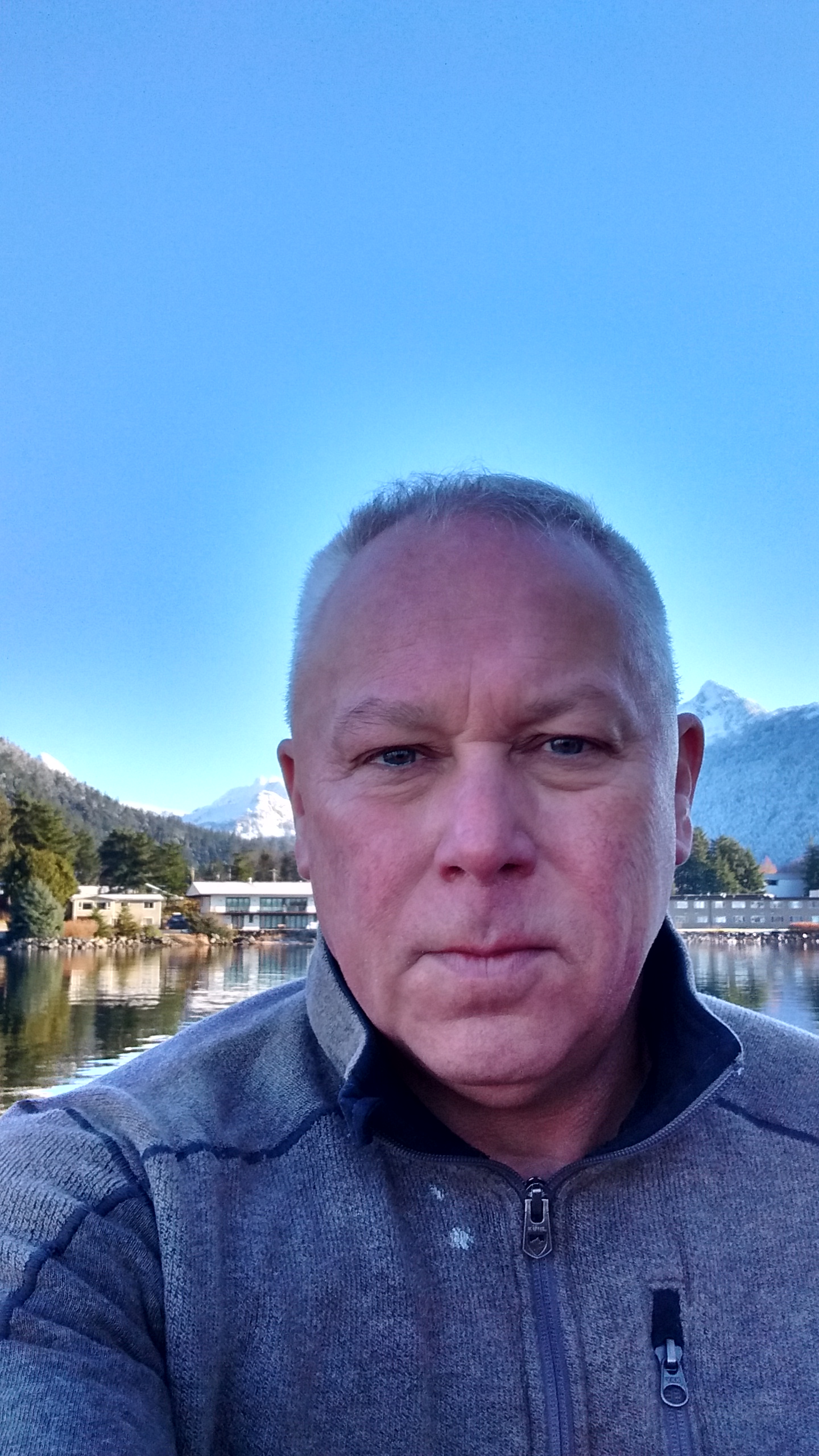
“Unless we welcome the viewpoints of all types of folks, we could miss really important things”: Mike Miller on Sitka Whale Fest’s 30th Anniversary
For decades, Sitka WhaleFest has celebrated marine life in and around Sitka Sound through science, art, and culture. WhaleFest brings together scientists, educators, artists, and local citizens to share knowledge, strengthen community, and inspire stewardship.
This year marks an extraordinary milestone: the 30th annual Sitka WhaleFest, which will be held from November 5th—9th, 2026. This year’s theme is “Generations of Giants: 30 Years of Whales, Wisdom, and What Follows.”
To commemorate this anniversary, we’re highlighting some of the many dedicated individuals who have helped shape and grow WhaleFest over the years into the landmark event it is today. Read on to learn about what makes WhaleFest special — and be sure to buy your ticket for the 30th anniversary symposium today.
Mike Miller, like many Sitka natives, spent most of his early career working in the marine industry. When he was approached by colleagues years ago who were interested in incorporating tribal viewpoints into their work, it seemed like the perfect way to ensure that natural resource management was informed by those who have lived on this land the longest.
Miller began facilitating collaboration between the marine industry and local tribe, and ultimately spent 20 years on Sitka’s tribal council doing the same for visiting researchers. Miller has spent decades working to encourage environmental research that is co-produced with Indigenous knowledge.
“It’s a big ask to effectively represent our communities, because we have a lot of things happen that are [researched] by people that aren’t from here,” he says. “I’ve been able to do the best I can to help fill that void.”
One of the central pillars of Whale Fest is to uplift Indigenous ecological perspectives — something Miller has firsthand understanding of. Read on to learn how he’s seen Whale Feat evolve over the years, and the impact that making sure all voices are heard can have.
Unlike many scientific symposiums, WhaleFest places a big focus on uplifting the voice and perspectives of Indigenous communities. Why is this important?
For WhaleFest it’s been a longstanding effort. Many folks [are] trying to learn from local communities that oftentimes have much closer ties to the focus of the research. In some cases, they have not only their personal knowledge on an everyday basis, but also knowledge that’s been handed down for a long period of time. [That can come] both from tribal people and then — especially in Southeast Alaska — there are also many non-tribal people that have been on the water for several generations, and they have a ton of firsthand experience.
Sometimes the researchers that come and visit can miss that viewpoint. I think WhaleFest has been doing its best to try to blend those two pools of observations and experience, to make sure research is informed by different eyes.
It’s amazing what you can learn. I’m not a scientist, but I’ve seen [that] science teams sometimes will have an inkling of what they think in advance, and the research will steer towards something that fits where they think it should be, and that’s not always true. If we’re already predisposed to an idea, it’s sometimes hard to let that go and have someone else say ‘No, you’re way off.’ So it’s really good to have that wide perspective, and I do think WhaleFest more so than a lot of science symposiums is working to do that.
What sort of communication and collaboration do you see happen at WhaleFest to facilitate that knowledge sharing?
WhaleFest is very welcoming.
A lot of people don’t like research work — it’s not so much the researchers [themselves], but there are a lot of people that have a tremendous amount of real observations, and they’ll sometimes feel like they’re they’re either not welcome or that people aren’t going to listen to them.
Go to any kind of symposium like that and look at the audience; if many people look the same, and talk the same, then you’re kind of like, ‘Well, is that really doing as much good as it could?’
I’ve seen the coordinators at WhaleFest make a very, very direct effort to get all the varying voices in the room. I’ve seen them put a lot of effort into asking what they’re missing, which a lot of times is hard for researchers to ask — acknowledging that ‘Hey, we might have some big pieces of information that aren’t here.’
You just never know where very valid sources of information might come from. It might be somebody whose first time on the ocean is here, and they notice something [different] because they don’t necessarily have an expected viewpoint of what they’re looking at. Even myself, I’ve had to often back up and remember that if it’s something I didn’t expect, not to dismiss it as not being a legitimate observation. Unless we welcome the viewpoints of all types of folks, we could miss really important things that are happening right under our noses.
Within tribal organizations, the people that I admire the most and who that taught me things were [often] in their 90s. People have experiences that were handed down to them 100 years ago. Sometimes you see things that would be a surprise right now, but then when you think about it, there are people that talked about the same things 100 years ago.
I always encourage people to be students of everything for as long as you live, as long as you can. I think WhaleFest embraces community participation and actual involvement. It promotes those strongly in not only understanding the research that happens, but also informing the questions that need to be answered for folks to have a complete understanding of what’s around us.
The size of Whale Fest also allows for better community involvement. [At other conferences] where you have 700 people in the room, it’s almost impossible to get a breakaway. With Whale Fest, even though it’s smaller — not smaller in the sense of anything less legitimate — it does allow for a lot more conversation about the topics than some of the bigger forums do. [It allows for] a lot of one-on-one conversation with folks.
As someone originally from Sitka, how have you seen WhaleFest change and grow over the years? What value do you think it provides the community?
What I’ve seen in it is a willingness to expand out to other people. I look at the audiences of things, and …it really again is the diversification of who they’re trying to get in the room for the talks, who they have giving presentations, the focus on youth and school systems, and [inclusion] of our smaller communities.
I’ve also appreciated that they’ve let [students] be involved with the breakout sessions afterwards, so that they can ask questions and talk. I’ve unfortunately seen several other programs where they’re teaching the youth to be involved and be advocates, but the people leading it seem to mostly be teaching them to carry their own viewpoint forward. It’s like be an advocate, but be an advocate for what I’m telling you to be an advocate for. And I appreciate that in the WhaleFest forums, the people that are leading those discussions are encouraging the kids to have their own viewpoint. It’s not telling them they need to advocate for [any particular] approach, but instead telling them to use their mind to come up with what they want to be an advocate for.
Additionally, to me a huge part of many of the workshops or discussion forums is that the science is quite diverse. Over the years I’d sometimes talk of the ‘hard’ sciences and the ‘tribal’ sciences, and [a colleague] would always correct me. He was like, ‘Nope, it’s all science. If you start further labeling it, then you’re starting to create this divide, potentially [insinuating] that one is less noble than the other.’
It’s a good reminder for folks. And I think the folks at WhaleFest are exceptional at promoting that, and not to be siloed in one type of science versus another.
On paper, Whale Fest is five days long. How do you think its effects extend after the symposiums have wrapped and visitors have left Sitka? What takeaways do you hope participants will have?
That it’s not something to be afraid of. That we embrace science.
Research oftentimes can get a negative [perspective]. You get more grant money for projects if you come up with the conclusion that our oceans are going to die, or the polar bears, or whatever the case. So if you’re not in [the research] world, it can seem like we’re looking for things that are wrong all the time. There’s a lot of things that are going right that don’t get funded. It’s a challenge to scientists to not scare people away.
At the end of the day, I think work needs to be done to make everybody feel like the end result [of research] is truly respective of many differing viewpoints. [The goal] is to be properly informed, not to use science as something that scares people away.
It takes work to stay away from sensationalism, and normalize outreach so that folks aren’t [falling into a paradigm] of ‘their view’ versus ‘our view’. [The goal] is a more collective view equally informed by all viewpoints.
For people that aren’t in the science community, if they read about something in the news and feel they were a part of it, they’re going to read it with a lot more of an accepting viewpoint. Anything we can do to promote …. science to be as embracing of as many viewpoints as possible. That really relies on making sure all the viewpoints are at the table for the discussion.
