Sitka WhaleFest, News, Featured
Sitka WhaleFest, News, Featured
Sitka WhaleFest, News, Featured
“We Want You to Go Home and Think About It:” Michael Castellini on Sitka Whale Fest’s 30th Anniversary
For decades, Sitka WhaleFest has celebrated marine life in and around Sitka Sound through science, art, and culture. WhaleFest brings together scientists, educators, artists, and local citizens to share knowledge, strengthen community, and inspire stewardship.
This year marks an extraordinary milestone: the 30th annual Sitka WhaleFest, which will be held from November 5th—9th, 2026. This year’s theme is “Generations of Giants: 30 Years of Whales, Wisdom, and What Follows.”
To commemorate this anniversary, we’re highlighting some of the many dedicated individuals who have helped shape and grow WhaleFest over the years into the landmark event it is today. Read on to learn about what makes WhaleFest special — and be sure to buy your ticket for the 30th anniversary symposium today.
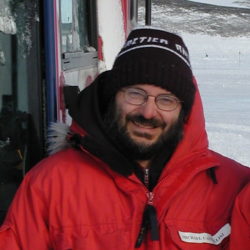
It was a lucky boat ride that first brought Mike Castellini to Whale Fest.
Since 1989, he has worked for the University of Alaska Fairbanks’ School of Fisheries and Ocean Sciences, specializing in marine mammal studies. While working to get the Alaska SeaLife Center in Seward up and running, he found himself on a boat with one of Whale Fest’s founders, and friendly chatting led to an invite to come to the second ever symposium to speak about marine mammals.
From there, Castellini started working with Jan Straley throughout Whale Fest’s early years to identify and invite new speakers.
“The two of us just had so much fun doing this project together that we just kept on going,” he remembers.
Speakers, students, and visitors from around the country started pouring into Whale Fest, and the rest is history.
With a perspective going back nearly to the very beginning of Whale Fest, Castellini is uniquely poised to reflect on how the symposium has grown over the years. In addition to presenting on marine mammal topics for several years, he has also given the closing talk to Whale Fest, threading together the speakers, workshops, and successes of the weekend.
This year, he’ll be giving the closing remarks again — and in addition to reflecting on the past 30 years, wants to look ahead to the next 30 as well.
“We’ve passed it on to the younger generation,” he says. “It’s always been a blast, and hopefully it will continue for a long time.”
Coming from an academic background, what do you think makes Whale Fest unique compared to other scientific symposiums?All of us have been to an endless number of regular scientific conferences, and they’re amazing for exchanging information, but there’s next to no public side to them. Certainly no educational side to them. At a [typical] conference, I give my 15 minute talk, I listen to a few other people, then I take off. Whale Fest is unique in that its goal is to celebrate the whales returning to Sitka, and at the same time provide an educational experience about marine science to the people who attend, using academic scientists or agency scientists to explain the work that they do in a way where we all interact with one another. I could be walking down the street in Sitka and somebody will stop me and ask a question because they heard my talk. This is not a routine scientific conference where everybody just gives their talks, picks up new information and goes home.
And you [also] combine all the social events that occur that still have a marine science background to them. The whale cruises, the various classes that are taught. It’s an opportunity to meet the public and use your expertise to help them understand marine science issues.
There’s always a whale talk or two at Whale Fest, as you would expect. But man, we’ve covered everything from the development of electronic instruments to track animals, to social issues, to fishing issues, to legal issues, to the environment, climate change — everything.
It’s completely different than what a scientific conference’s goals are. The idea of being able to sit there and meet with the students afterwards, and they always have tons of questions. A great deal of them are, ‘I want to be like you when I grow up, how do I do that?’ We spend a lot of time talking about the how we got to where we are, what they can do, issues they’re concerned with, how do they talk to their parents about climate change. All these different things. It’s great fun.
You have been with Whale Fest since nearly the beginning. How have you seen it evolve and change over the years?
That’s part of my [closing] talk this year. What I’m not going to do [is have] a bunch of people that have been there forever talking about things they’ve done in the past, with no mention at all of where we are now, how we got here, why we’re here.
Whale Fest has evolved over time, both in size and in topics. What I want to do is take the things you’re going to hear about today and from a historical perspective, talk about how we got to those. What’s the backstory? What are you going to hear and how did we get here?
It’s not going to be like, ‘In 1998 we did this, then in 1999 we did this, and in 2000….’ Even I would fall asleep during my own talk doing that. So it’s going to be more like, ‘Here are the things we are arguing and talking about today that are relevant to your lives. How did we get here? And why did we even bring these up?’
In the past, when you’ve done the closing talks for Whale Fest, how do you usually go about that? Is there a way that you think about it or approach it?
I ask for two or three slides from each of the speakers, and I [synthesize them] to try to say, the weekend has been one unit. There’s been a theme moving through the whole thing. And now we’ve come to the end of that. What is the overall take home concept that we’ve been looking at?
We want you to go home and think about it. Talk to your kids about it, to your parents, to your friends. Many times Whale Fest has been right before a national election. And I’ll tell everybody, ‘You’ve got to vote.’ I don’t tell them how to vote, but if you’re old enough then vote, talk to your parents about voting.
I really try to emphasize that to solve all of the concerns of marine science that you’ve heard about this weekend, you don’t have to be a marine scientist. We need communications people. We need lawyers. We need doctors. We need artists. We need students. [I want] young students to understand that we can’t solve all these big problems solely by just working on the pH of ocean water. We do need that, but we need everybody else [as well].
We say, ‘Here are all the things you can do. Here’s what you can try, now that you came to Whale Fest. I hope you learned a whole bunch.’
From the perspective of the marine mammal world, have you seen Whale Fest have impacts outside of Sitka?
Absolutely.
What scientists usually can’t do is massive outreach. [But at Whale Fest], we have people coming in from the East, from Florida, from Hawaii, from Michigan, from all over the place. We have people returning all the time. That is not something that is usually seen at a university research level.
It has increased massively local understandings of what they do at the Science Center that’s relative to marine mammals. It’s been really impressive.
That’s primarily because of the massive education component. We didn’t start out that way. It was just people coming to listen and maybe some students were there. Jan Straley was the driving force for saying, ‘Hey, we could be teaching students and giving credit and all sorts of things.’ When that switch happened, the flavor of the whole thing changed.
Considering all of the retrospective that’s surrounding the 30th anniversary, what hopes do you have for the direction that Whale Fest takes in the future?
It’s not like we’ve spent 30 years building Whale Fest and now we’re here and we’re done. It’s like, no, this continues on.
I gave a talk maybe eight or nine years ago on what Sitka Whale Fest in 2040 was going to be covering. Ten years ago, we didn’t know that we were going to be talking about ocean acidification. We didn’t know that we were going to be talking about all these other things we’re talking about today.
The exciting thing is to come and find out what cool things we learned over the past ten years, and to come back in ten years, because we don’t know [what will happen]. Something could just come in from out of nowhere, and be interesting to us.
There’s something happening out there today that is the beginning of something. Some young student is going to go, ‘Oh, that’s weird,’ and then it’s going to take off.