News, Aquarium, Featured
News, Aquarium, Featured
News, Aquarium, Featured
Wolf Eels on the Dating Scene
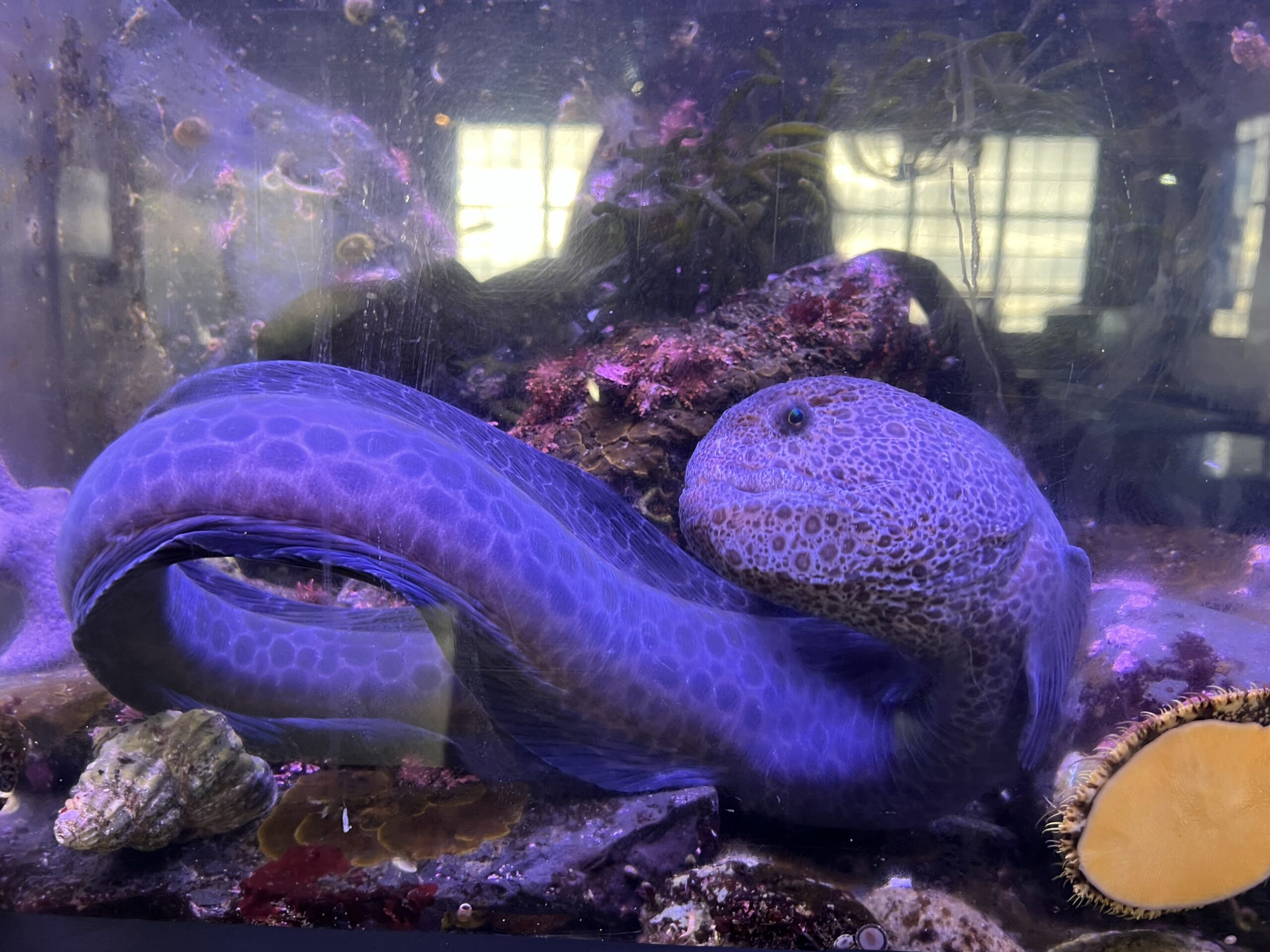
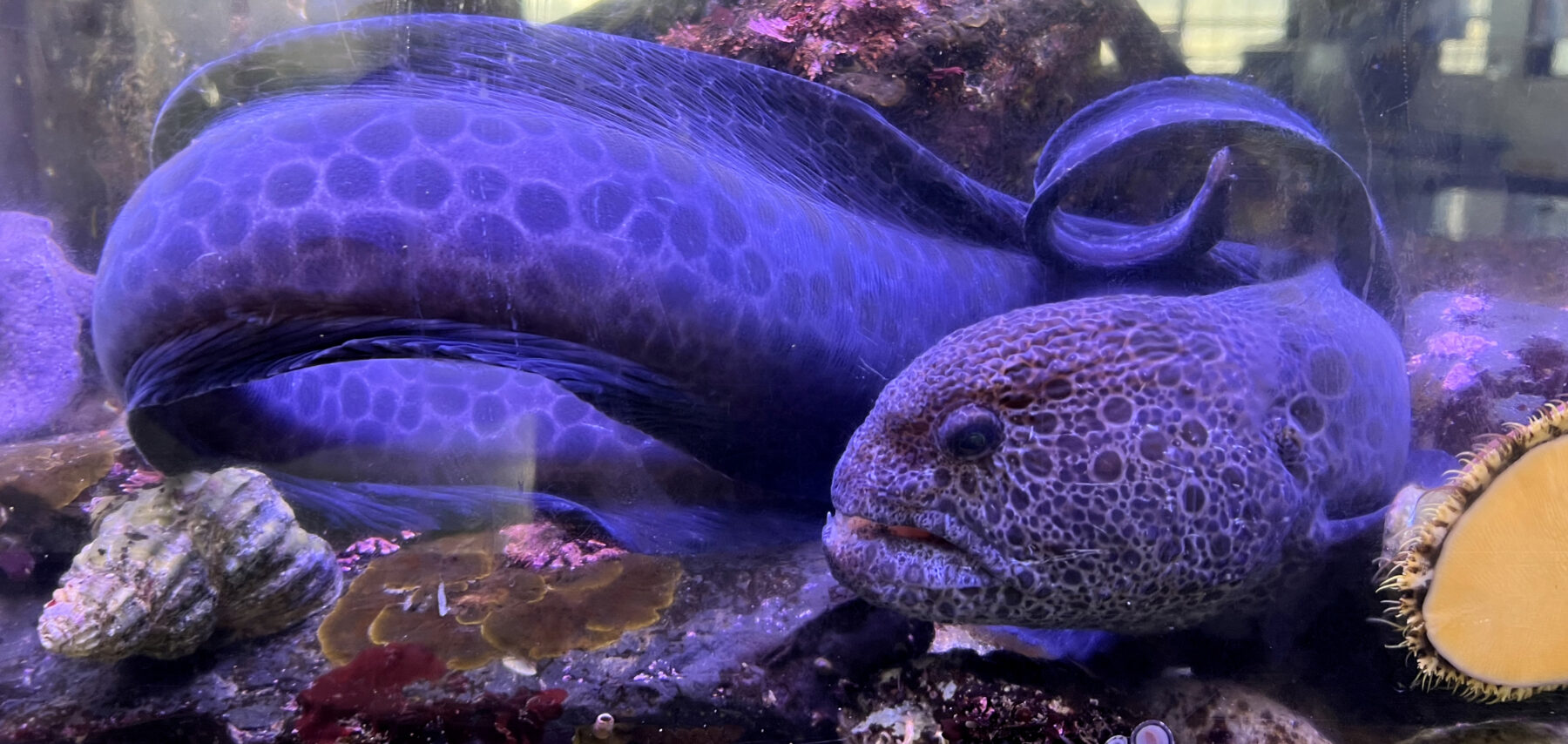
Elongated bodies snake within rock crevices and algae beds in the waters of the North Pacific. A fish without scales, but covered in circular patterns of dark grey, almost bluish skin, slides out of sight and into its den-like home within the rocks. Anarrhichthys ocellatus, otherwise known as a Wolf eel, is not an eel at all but a highly adapted fish whose body can grow up to eight feet and features jaws that can easily crush through crab and urchin shells.
Our resident wolf eel, affectionately known as Wanda, stretches approximately six feet long and is estimated to be around nine years old. Wanda lives in our nearly 1000-gallon Molly tank, and prefers a rocky den to the limelight like her wild relatives. Earlier this spring, Wanda started acting as if she was restless and uncomfortable; she stopped eating and drew the attention of our aquarist, Matt Wilson.
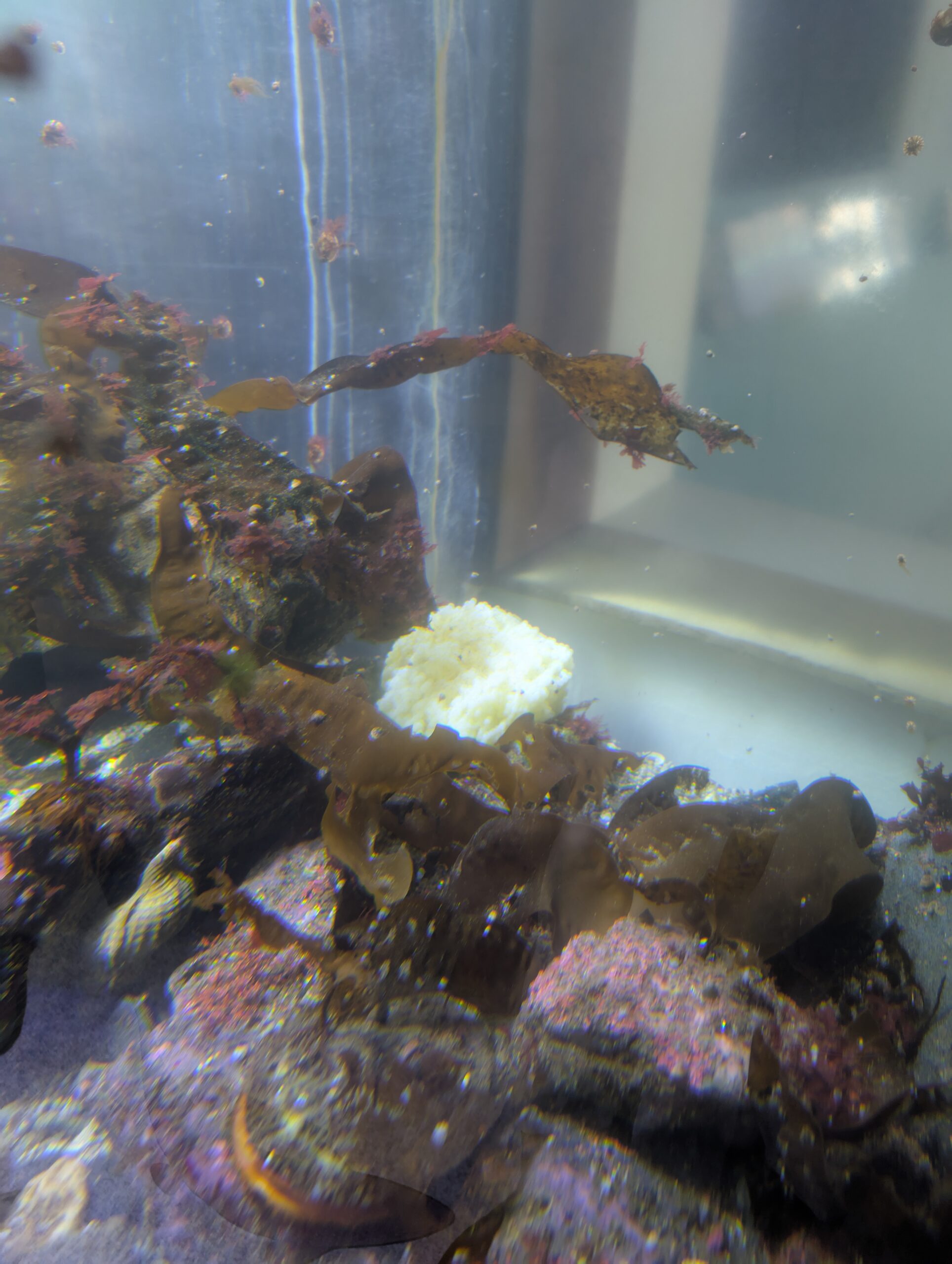
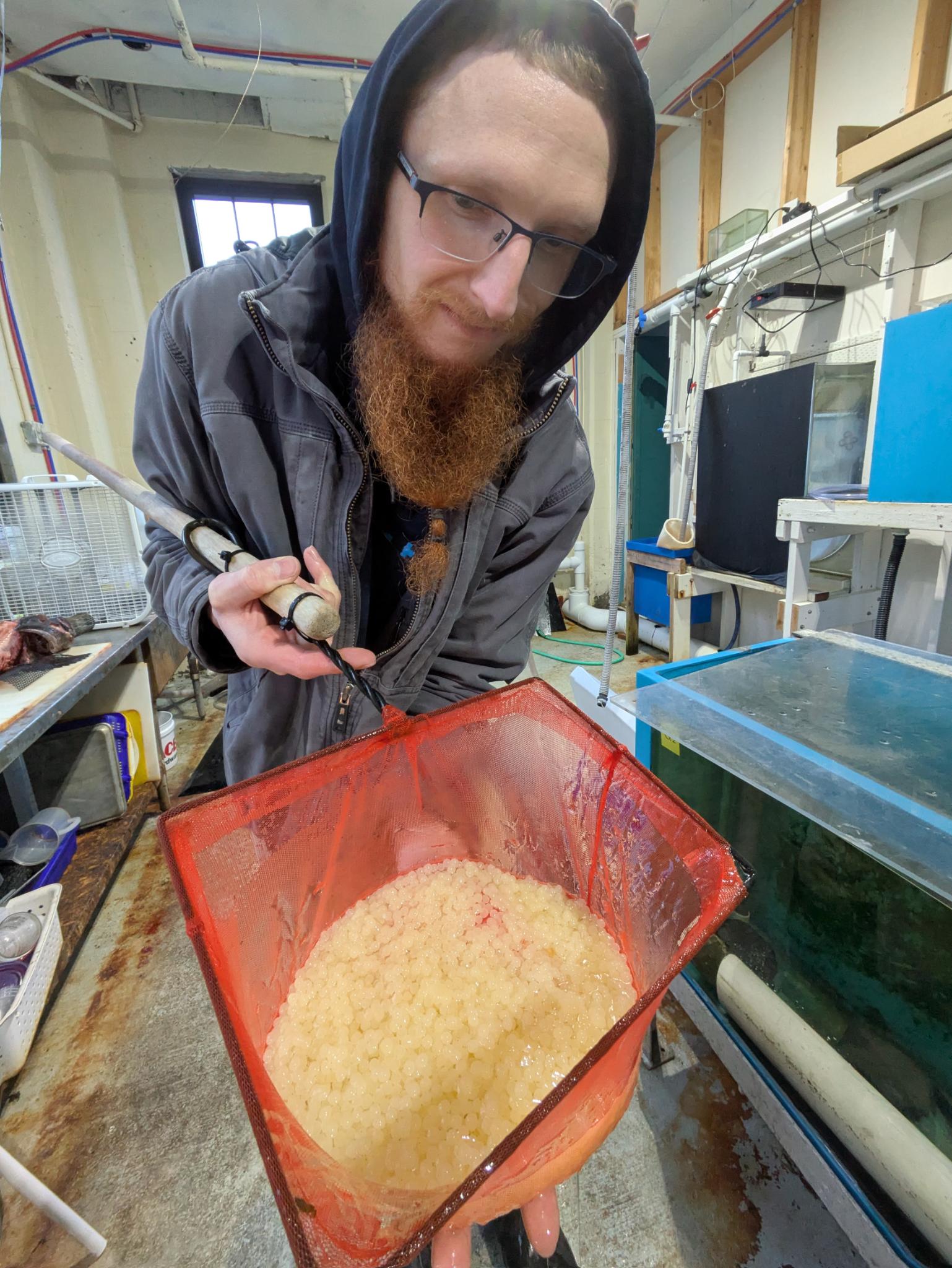
Days went by of Matt checking on Wanda and watching her become more and more uncomfortable, but the source of the irritation soon became obvious as her belly grew increasingly swollen. It was obvious that her normal reproductive cycle was the source of discomfort, but some complications could occur that kept Matt on edge. Fortunately, he came in one morning in early spring to find a clutch of approximately 10,000 eggs and a resting Wanda in her den. After releasing her eggs, which took up nearly a third of her body weight, Wanda was able to go back to happily munching on crabs and spying on aquarium visitors from the comfort of her den. This is only the second batch of eggs Wanda has produced so far, but it means she is well within sexual maturity, and the frequency of laying eggs may increase with age.
Matt suspects that part of Wanda’s struggle near the end of egg release could be due to the lack of a mate to stimulate her production of hormonal triggers. Thankfully, there is a first date in our wolf eel’s future. A few years ago, our aquarium procured another wolf eel and, though younger and smaller, we are now quite confident it is a male and could prove a perfect partner for Wanda. While the Science Center does not plan to raise wolf eel babies anytime soon, pairing our wolf eels could result in mutual benefits to their overall health and quality of life.
Wolf eels pair for life, cohabitating in the same cozy rock crevices. When the female deposits the melon-sized clutch, the male fertilizes them, and both coil around the eggs together. The dedicated parents care for the eggs for four months. When they are close to hatching, the embryos release an enzyme that weakens the egg. The parents will begin to massage the eggs with their bodies to gently break them open so that the baby wolf eel larvae can swim off to start their own lives.
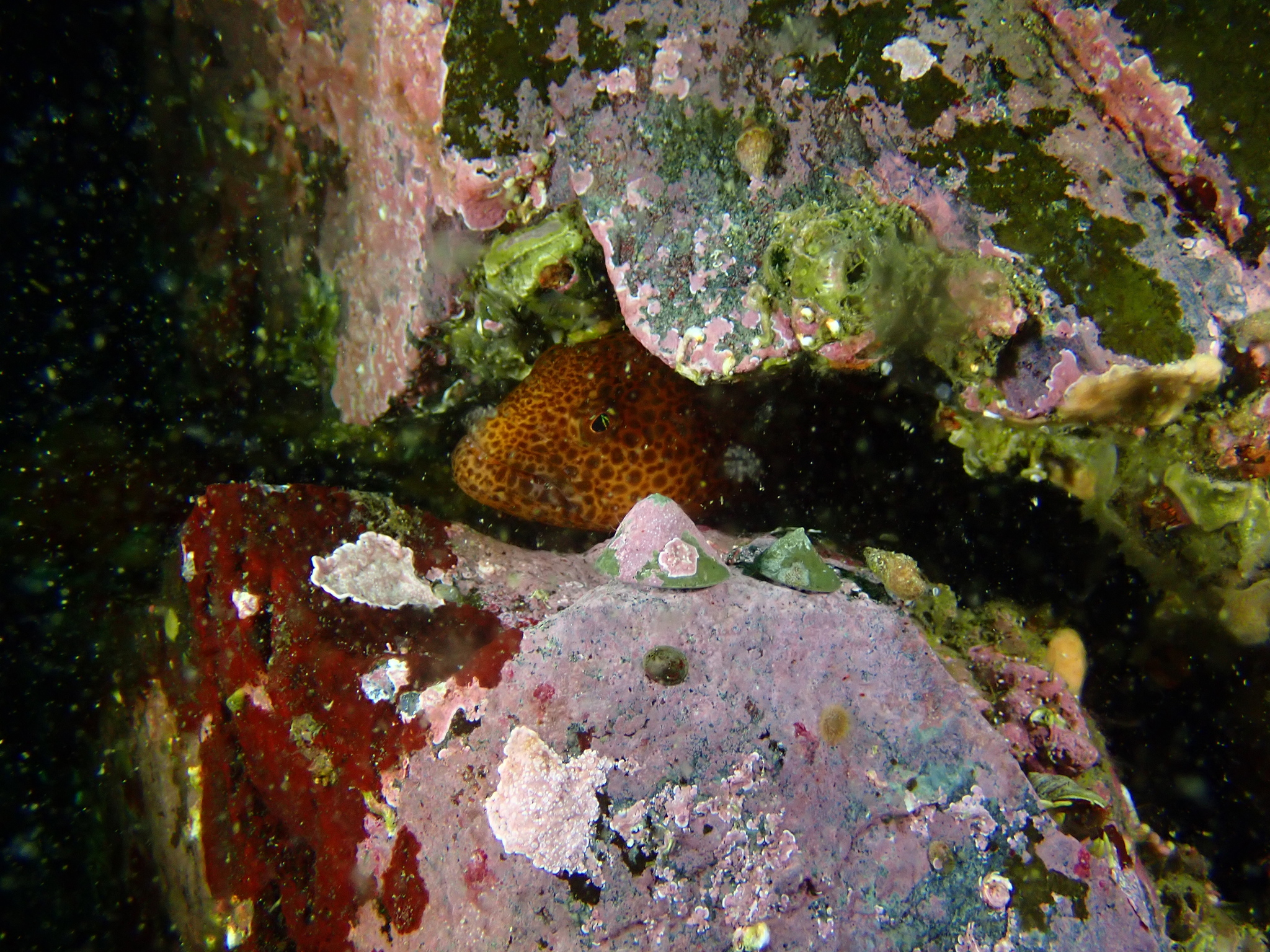
Once past their larvae stage wolf eels will stay in shallow water searching for rock crevices to call their own and partners to share them with. Once fully grown and stretching up to eight feet wolf eels are dominant predators in the ocean and can live up to 28 years, reaching sexual maturity around seven years. Because of their sheer size, the wolf eel does not fear much, divers often report on the curiosity and seemingly playful behavior of these formidable fish when encountered in the wild.
Wolf eels can be found from northern Baja California to the Berring Sea and west to Russia and the Sea of Japan. But you can forgo your wetsuit and join us at the aquarium to see Wonda and (fingers crossed) her new beau anytime during open hours.
Summer Hours are Sunday through Thursday 9:00 am to 4:00 pm and Tuesday 9:30 am to 4:00 pm
– Aquarium Behind the Scenes tours can be booked HERE